
What Is Energy Storage and Why Does It Matter?
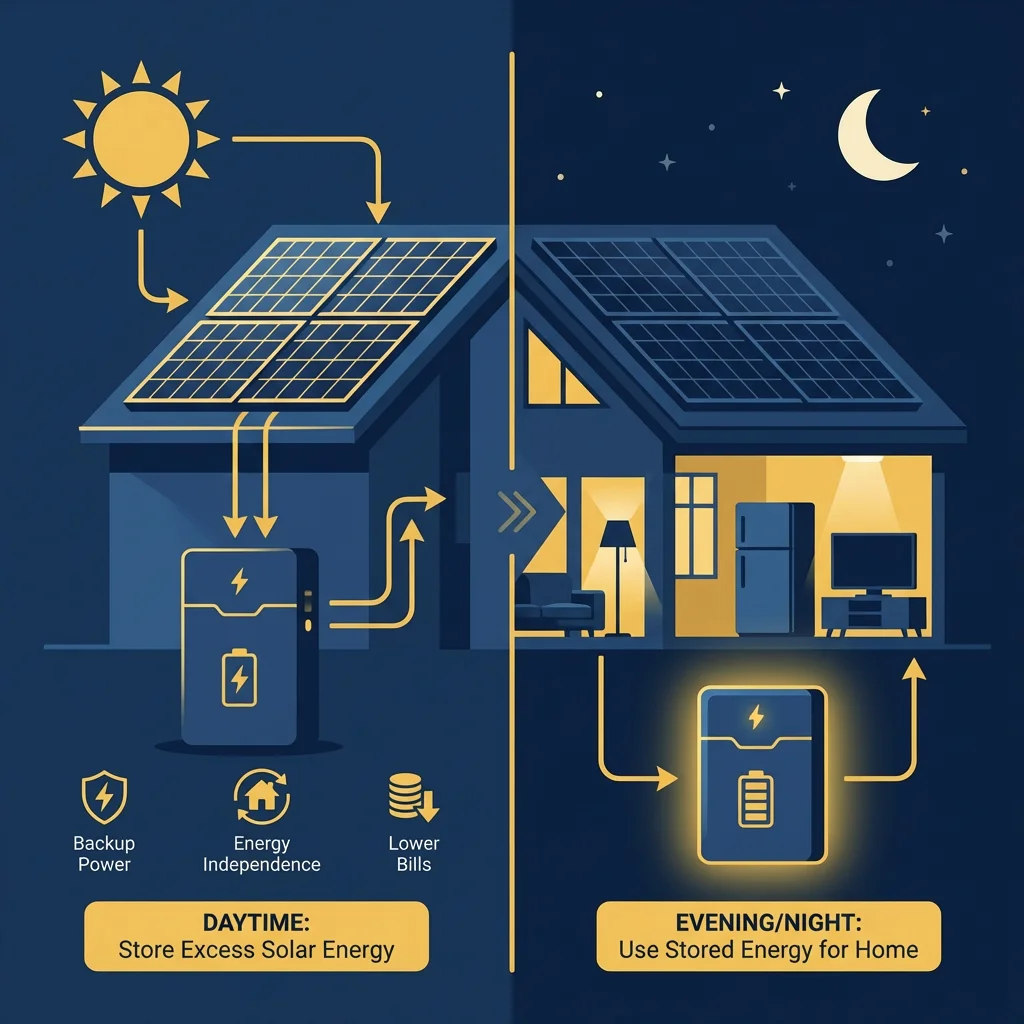
Energy storage means capturing excess energy generated by solar panels and keeping it for later use. Instead of sending excess electricity straight to the grid, a battery storage system allows you to store electricity and use it when you need it most. Your energy usage patterns play a key role in determining the benefits of battery storage. Households with higher or more variable energy usage may find battery storage more worthwhile.
For prices by battery type and size, see our guide to how much a solar battery costs in the UK, or get an instant price for your home.
Solar battery storage is becoming more popular as energy prices rise. Homeowners want more control over electricity use, lower energy bills, and less reliance on the grid. By storing stored energy from your own solar power, you can use more of the electricity your panels produce. However, using stored energy from solar batteries is less efficient than using energy directly generated by solar panels.
Energy storage also supports renewable energy and reduces dependence on fossil fuels, helping households lower their carbon footprint.
Adding a battery turns a grid-tied installation into a hybrid one. Grid-tied, hybrid and off-grid setups differ in how they use the grid and what they need from the inverter, so it's worth knowing which one you're buying before you decide.
What Are the Benefits of Solar Battery Storage?
Solar batteries offer several clear benefits for homes with solar panels.
They allow you to store excess energy generated during the day and use it later, such as in the evening or during cloudy days. This means you buy less electricity from your energy supplier and save money on electricity costs.
A home battery storage system can also provide backup power during power outages, but only if it has been specified and wired for it. That is covered in detail further down, and it is not automatic.
Other benefits include:
- Lower energy bills
- Less electricity imported from the grid
- Better use of solar generation
- Reduced reliance on the grid
A battery storage system is not required for solar panels to work but is highly recommended to maximise self-consumption, reduce grid reliance (potentially by a large margin, depending on your energy usage, system generation and energy costs at the time of installation), and provide power during outages.
By storing excess power, solar batteries also help reduce strain on the grid during peak demand.
How Battery Storage Works
Battery storage is what lets you keep the electricity your panels make instead of giving it away. When your solar panels generate electricity during the day, they often produce more than your home needs at that moment. Instead of letting this excess energy go to waste or sending it back to the grid, a battery storage system allows you to store electricity for later use.
Here's how it works: as your solar panels soak up the sun and generate solar power, any surplus energy is directed into your home battery storage system. This stored energy can then be used in the evening, on cloudy days, or whenever your panels aren't producing enough electricity to meet your needs. By tapping into your own solar power, you reduce your reliance on the grid and can save money on your electricity bills.
One of the biggest advantages of solar battery storage is reduced reliance on the grid. With a battery in place, you're less affected by rising energy prices and can use more of the clean energy your panels produce. If there's a power cut, a battery specified with backup capability can keep essential appliances running.
Most home battery storage systems use advanced lithium-ion batteries, which are known for their efficiency and long lifespan. The capacity of your battery, measured in kilowatt hours (kWh), determines how much electricity you can store and use later. For example, a typical residential solar system might generate 5-10 kWh of excess electricity per day, which can be stored for use when you need it most.
By storing surplus energy, you make the most of your solar generation, reduce your carbon footprint, and take a big step towards lower energy bills and reduced reliance on the grid. With more homeowners choosing to add battery storage to their solar systems, it's becoming a cost-effective way to maximise the benefits of solar energy and protect against future energy costs.
What Types of Solar Battery Storage Systems Are Available?
There are different types of battery storage systems designed for residential solar systems and commercial applications.
Most home battery systems use lithium batteries due to their efficiency, long lifespan, and compact size. Solar storage batteries can be sized based on capacity and how much electricity your panels produce.
There's also a difference in how the battery connects. A hybrid inverter handles panels and battery together in one unit, which suits a new installation. An AC-coupled battery has its own inverter and bolts onto solar you already have, whatever brand the existing inverter is. The solar inverter guide covers both.
Residential solar systems with battery power can be tailored to match how much electricity your household uses, measured in kilowatt hours. Larger systems store more electricity, while smaller systems support lower usage homes.
How Much Does Solar Battery Storage Cost in the UK?
Solar battery cost in the UK depends on capacity, technology, and installation. The cost of solar batteries varies depending on their capacity, type, and brand.
Prices start from around £2,500 to £6,000 for a typical home battery, with installation adding £1,000 to £3,000 depending on your current system and roof setup. The cost of solar battery storage can range from £1,500 to £10,000, with a typical 5kWh battery system costing around £4,600.
The upfront cost of solar batteries can be a significant consideration, with prices starting around £2,500 and going beyond £10,000 depending on capacity.
Until April 2027, residential batteries in the UK qualify for 0% VAT, making 2026 an opportune time for installation.
While the initial cost can feel high, many homeowners see long-term savings as electricity prices continue to rise. Using stored energy during off peak times and high-cost periods helps reduce energy bills over time.
Pairing a solar battery with existing solar panels could save you up to £1,400 off your electricity bills every year, depending on your energy usage, system generation and energy costs at the time of installation.
What Should You Consider for a Home Solar System with Batteries?
Before adding battery storage, consider how much electricity your solar panel system generates and how much electricity you use.
Key factors include:
- Daily electricity use
- How much excess electricity your panels produce
- Available space for a home battery
- Budget and capacity needs
If your panels produce more electricity than you use during the day, battery storage allows you to keep that energy for later use instead of exporting it.
A professional installer can assess your current system and recommend the right battery size.
Do Solar Batteries Provide Backup Power During Power Cuts?
Only if the system has been specifically set up for it.
A standard grid-connected battery shuts down along with everything else when the grid fails. That's anti-islanding protection, required under the G98 and G99 engineering recommendations so your system can't energise a network an engineer believes is dead. The battery can be sitting there fully charged and it still won't power the house.
Getting backup means an inverter with Emergency Power Supply (EPS) capability, wired and configured for it at the time of installation. Depending on the unit, that gives you either a single backup socket or a changeover arrangement that keeps selected circuits alive, covering things like lighting, refrigeration, heating controls and medical equipment. Whole-home backup is a larger and more expensive piece of engineering than most quotes imply.
Specify it up front if outages matter to you, which is often the case in rural areas or where heating depends on electricity, such as a heat pump. Ask which circuits the EPS will actually carry, and get the answer in writing on the quote.
Batteries can be installed in garages, on external walls, or in utility rooms. PAS 63100:2024 rules out lofts and bedrooms for domestic battery installations, so siting is decided early.
How Can You Optimise a Solar Battery System?
To get the most from solar battery storage, homeowners should monitor electricity use and solar generation regularly.
Optimisation tips include:
- Using appliances when panels produce more electricity
- Storing excess energy for evening use
- Monitoring battery performance
- Keeping panels clean
Smart technology can help manage when to store energy, when to use it, and when to export excess electricity to the grid.
Are There Any Downsides to Battery Storage?
While solar batteries offer many benefits, there are some drawbacks to consider.
The initial cost is the biggest barrier. Not all homes generate enough excess power to fully justify a battery. Some households may see better savings from solar panels alone, depending on electricity use.
Battery capacity is also limited, so very high usage homes may still need grid electricity at times.
Do I Really Need Battery Storage for My Solar System?
Battery storage is not essential for every home, but it can be extremely valuable.
If your solar panels generate excess energy, you want backup power, or you want to reduce electricity bills further, battery storage makes sense. If your electricity use is low during the evening, you may benefit less.
The right choice depends on your roof, usage, energy prices, and budget.
Is Solar Battery Storage Worth It?
Solar battery storage is a powerful addition to a solar panel system. It allows homeowners to store electricity, reduce reliance on the grid, protect against power cuts, and save money as energy prices rise. The long term benefits of solar battery storage include cost savings (depending on your energy usage, system generation and energy costs at the time of installation), reduced reliance on the grid, and a positive environmental impact.
With falling costs and improving technology, more homeowners are choosing battery storage to make the most of their solar energy. The typical lifespan of a solar battery is about 10 to 12 years. A large and growing share of new UK domestic solar installations now include storage from the outset. Storing your own energy for later use is generally more profitable than selling it back to the grid, since importing grid electricity usually costs more than exporting it. Homes equipped with solar and battery storage may also command a price premium, though any uplift varies by property and local market. Research from the Urban Big Data Centre (University of Glasgow) found homes with solar panels attract roughly a 6-7% premium (source). Additionally, some homeowners can earn around £220 a year by exporting excess electricity generated by solar panels back to the grid through a Smart Export Guarantee (SEG) tariff.
For many households, solar batteries are a sensible step towards reduced reliance on the grid and lower energy bills.
If you would like a survey, see how CRG Direct's battery storage service works.
Sources
- Urban Big Data Centre, University of Glasgow, the research behind the ~6-7% solar property-price premium (the study found a 6.1%-7.1% premium): How do solar panels affect property prices in the UK?. Underlying peer-reviewed study: Asproudis, Gedikli, Talavera & Yilmaz, "Returns to solar panels in the housing market: A meta learner approach", Energy Economics, full paper.
- Ofgem, Smart Export Guarantee (SEG): official scheme page.