
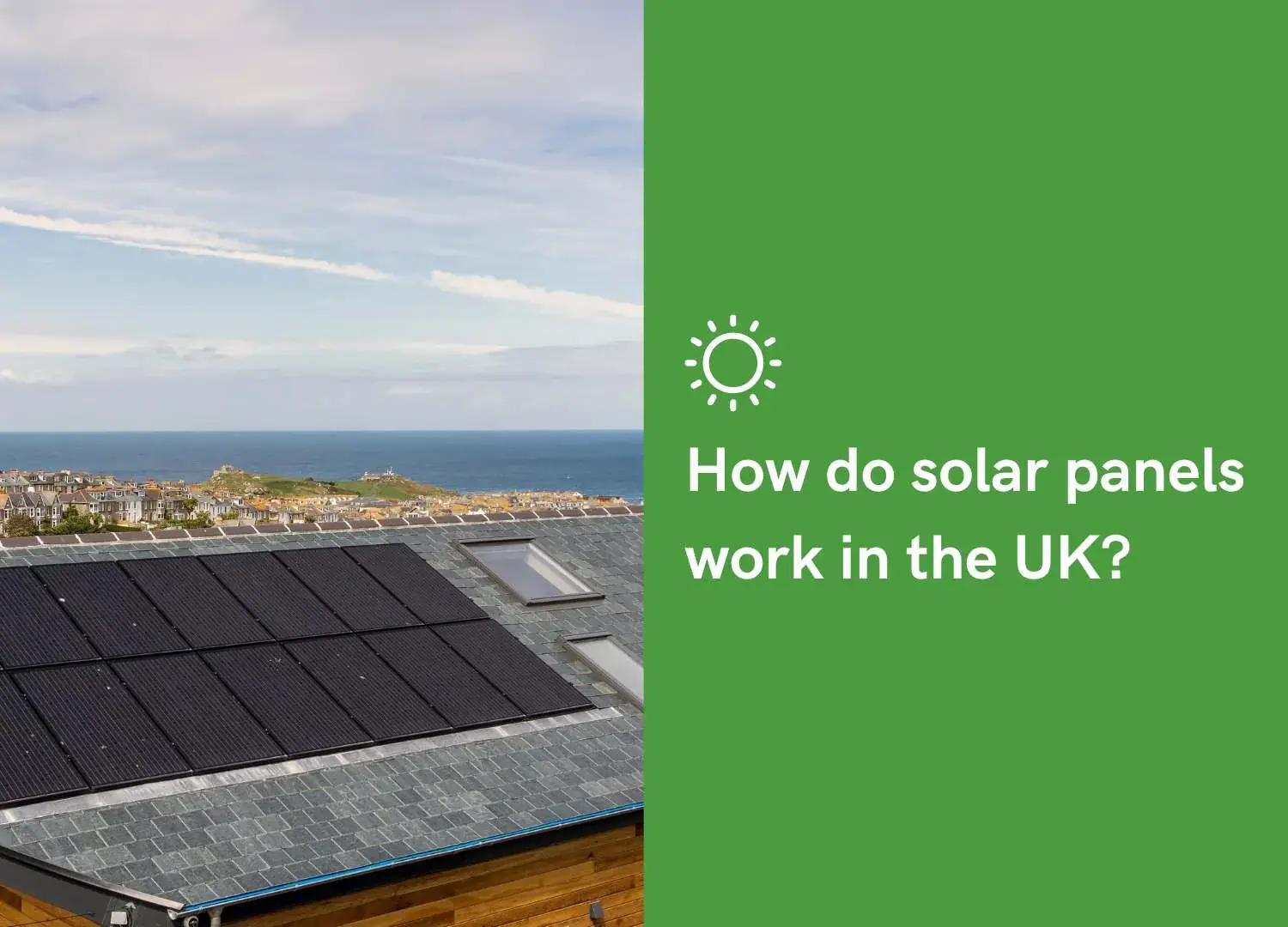
Solar panels convert sunlight into electricity. The process runs automatically, produces no emissions, and works whether the sky is clear or overcast - though output varies significantly between the two.
Here's what's actually happening, and what it means for a typical UK home.
The Physics, Simply Put
Each solar panel contains dozens of photovoltaic (PV) cells made from silicon. Silicon has a useful property: when light hits it, electrons in the material absorb the energy and start moving. That movement of electrons is an electric current.
The current produced is direct current (DC) - the same type that flows from a battery. Your home runs on alternating current (AC). The inverter, mounted on an internal wall near your consumer unit, converts the DC electricity from the panels into AC electricity your appliances can use. The whole process is continuous and instantaneous during daylight hours.
There are no moving parts in the panels or inverter. Nothing burns, nothing rotates, nothing wears in the way mechanical systems do. That's why a well-installed system needs almost no maintenance and typically lasts 30-40 years.
What Happens to the Electricity
Once the inverter produces AC electricity, it enters your home's circuit exactly like grid electricity. Your appliances use it without knowing the difference.
Four things can happen to the electricity your panels generate:
Used immediately. Anything drawing power in your home at the moment of generation - a washing machine, lights, a fridge - uses the solar electricity first. This is the highest-value outcome: you're replacing electricity you'd otherwise buy at 24.5p/kWh.
Stored in a battery. If you have a battery installed, surplus generation charges the battery rather than immediately exporting. You draw from the battery in the evening when the panels stop producing.
Exported to the grid. Electricity the home doesn't use and the battery (if fitted) doesn't need exports automatically via your smart meter. The Smart Export Guarantee (SEG) pays you for this - the highest fixed rates in 2026 are 25p/kWh (Good Energy) and 24p/kWh (EDF), but these top rates are limited and conditional (often only available if you buy your solar system from that supplier). Most widely-available SEG rates are lower, and rates vary by supplier and change over time.
Drawn from the grid. At night, on heavily overcast days, or when demand exceeds what the panels produce, your home draws from the grid as normal. The solar system and grid supply work in parallel throughout.
Which of those four dominates depends on the kind of system you have. Grid-tied, hybrid and off-grid systems each deal with surplus generation differently, and that choice matters more to your bill than the panels themselves do.
Do Solar Panels Work in UK Weather?
Yes. PV cells generate electricity from daylight, not heat or direct sunshine. Overcast days reduce output but don't stop it. A 4kW system in Hampshire generates around 3,400 kWh per year across all weather conditions - including November through January, when monthly output drops to 150-200 kWh compared to 500-600 kWh in June.
The UK's position at 50-60°N latitude means shorter days in winter and longer days in summer. Annual generation averages out at roughly what a typical 3-4 bedroom household needs to cover 50-70% of its electricity use, before adding battery storage.
Hampshire and the southeast get around 10-15% more solar irradiance than Scotland, which is why system sizing recommendations vary slightly by location.
Solar PV vs Solar Thermal
These are two different technologies that are often confused.
Solar PV panels generate electricity from sunlight, using the photovoltaic effect described above. This is what most homeowners install, and what this article covers.
Solar thermal panels use sunlight to heat water directly, typically feeding into a hot water cylinder. They're less common in new installations because a heat pump or a solar PV system with an immersion diverter achieves the same result while also providing general household electricity.
The two can work alongside each other, but most new installations in 2026 focus on solar PV, sometimes combined with a heat pump rather than separate solar thermal.
System Components
| Component | What it does |
|---|---|
| Solar panels | Convert sunlight to DC electricity |
| Inverter | Converts DC to AC for home use |
| Generation meter | Records total electricity produced |
| Smart/export meter | Measures electricity exported to grid |
| Battery (optional) | Stores surplus generation for later use |
| Consumer unit | Distributes electricity around the home |
What It Costs and What It Saves
A 4kW system installed in Hampshire costs £6,000-£8,000 in 2026, including 0% VAT (confirmed until March 2027). A 10kWh battery adds £2,500-£6,500.
At current Ofgem electricity prices (24.5p/kWh), a 4kW system saves a typical household around £400-£550 per year on electricity bills, with an additional £100-£250 from SEG export payments, depending on your usage, generation and energy costs. How that stacks up against the installation cost varies a great deal between properties, and how long solar panels take to pay for themselves explains what drives the difference. Ask any installer for a written estimate based on your own consumption rather than a generic figure.
The claim that solar panels cut bills by 80-90% is misleading for most households. That figure applies only if your system is significantly oversized relative to your usage, or if you're starting from very high bills. A realistic saving for a 3-4 bedroom home with a 4kW system and no battery is 35-55% on the electricity portion of the bill.
View our solar panel installation service
FAQ
Do solar panels generate electricity on cloudy days? Yes, at reduced output. Thick cloud cover drops generation to around 10-25% of full-sun output. Light cloud or haze has a smaller effect. UK panels generate useful electricity throughout the year - they just generate more in summer than winter.
What happens at night? Panels produce nothing at night. Your home draws from the battery if you have one, then from the grid. The solar system and grid supply work in parallel throughout the day and night, and the switch between them is automatic and invisible.
How much roof space do I need? A 4kW system (10 panels) needs around 20m² of usable roof space. Skylights, chimneys, and vents reduce available area. High-efficiency panels (22-24%) produce more per square metre, which helps on smaller or partially obstructed roofs.
Does the inverter need replacing? Inverters typically last 10-15 years. Budget £600-£1,500 for a replacement when needed. Panels and mounting hardware generally outlast their warranties and rarely need attention. Our solar inverter guide covers the types and what they cost.
Can I add a battery later? Yes. Some inverters are battery-ready and simplify the retrofit. Others need replacing when you add storage. Confirm battery compatibility with your installer when choosing the inverter - it's a straightforward question and makes a big difference to future flexibility. See adding a battery to an existing system.
Is there any government support? 0% VAT applies to residential solar installations until March 2027. The Warm Homes: Local Grant can fully fund energy efficiency and low-carbon heating measures worth up to £33,200 (up to £16,600 each) for eligible low-income households in England (EPC D-G), and the wider Warm Homes Plan is expected to add low-interest loans for all households from 2027.Check your eligibility here.
CRG Direct has installed solar panels across Hampshire since 2017. MCS Certified, HIES Accredited.
Contact us for a free site survey and quote. We'll respond within one working day.