
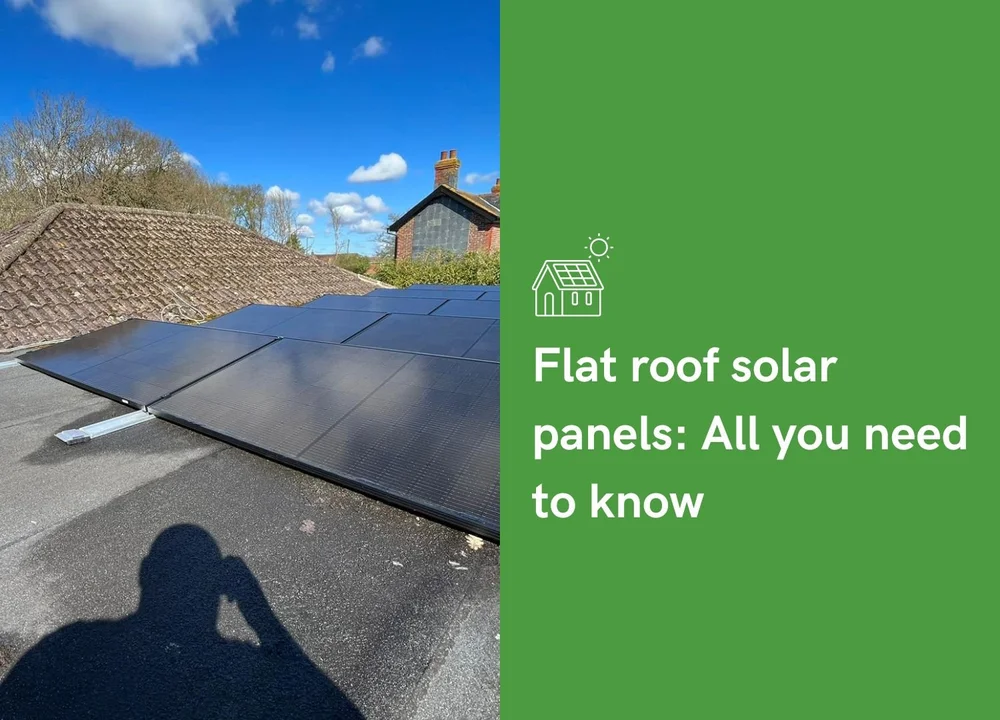
Get a quote for solar flat roof systems. We can supply, fit and install on many different types of flat roof, whether it's slate, concrete, or another material.
Can You Put Solar Panels on a Flat Roof?
Yes, you can. Flat roofs are an excellent place to install solar panels. Panels are mounted on specialised flat roof mounting systems, adjustable frames that tilt the panels at the optimal angle towards the sun for maximum energy generation.
This means you can add solar panels to most flat roofs, whether it's your house, garage, or business. Before installation, it's worth checking that your roof is strong enough to support the added weight and that there's no shading from nearby trees or buildings.
How Do Flat Roof Solar Panels Work?
Flat roof panels sit on adjustable frames set at around 30 to 40 degrees, the ideal tilt angle to maximise solar capture throughout the day. Unlike panels on pitched roofs, they use specialised mounting systems to position them for the best sunlight absorption and efficient electricity generation.
Panels should never be laid flat on the roof surface. Poor water runoff, dirt build-up, and a suboptimal angle all reduce efficiency significantly. Spacing panels about one metre apart also helps minimise shading between rows and supports long-term performance.
There are two main ways panels are secured:
Ballasted systems. Concrete blocks or heavy slabs hold the mounting frames in place without any drilling or penetration of the waterproof membrane. This protects the roof structure from water ingress and helps maintain most roof warranties.
Mounted systems. Adjustable metal frames fixed with anchors or screws. Some installations use a hybrid of both. The choice of mounting technique affects installation costs, wind load resistance, and how efficiently panels are positioned to capture sunlight.
What Are the Benefits of Flat Roof Solar Panels?
Flat roof solar systems offer a number of advantages over pitched roof systems:
- Flexible placement. You can angle the panels in any direction to achieve the best sun exposure, regardless of which way the roof faces. East/west systems can even outperform south-facing systems by up to 25% per area of roof space.
- Easy maintenance. Flat roofs are far more accessible than sloped roofs, making cleaning and repairs straightforward and less time-consuming.
- More space for more panels. Flat roofs often offer more usable roof space than a pitched roof, supporting larger solar installations and higher electricity generation.
- No drilling required. Ballasted systems protect your roof from leaks and damage, with no penetration of the roof surface.
- Lower installation labour costs. Easier access and improved safety on flat surfaces typically means lower labour costs compared to pitched roof systems.
- Lower energy bills. Your system generates clean electricity that offsets your energy bills, with annual savings typically ranging from £783 to £1,567, depending on your usage, generation and energy costs.
- Future expansion. Flat roof systems make it easier to add more panels as your energy needs grow.
- Environmental benefit. Generating green energy reduces your carbon footprint and supports renewable energy goals.
How Should a Flat Roof Solar System Be Designed?
A well-designed flat roof solar system makes the most of your available roof space and sunlight. A professional installer will assess your flat roof and consider:
- The size and shape of the roof
- How much sunlight it receives throughout the day (using tools like street view and solar calculators to check for shading)
- Which mounting system suits the roof structure
- Panel spacing to prevent shading between rows
The optimal tilt angle for most UK locations is 30 to 40 degrees, facing due south where possible. Panels mounted at even 10 degrees can yield 52% to 72% more power than panels laid flat. A good installer will run the numbers for your specific location and roof to make sure you get the best long-term performance.
For buildings where roof space is limited, an east/west layout, with one row facing east and one facing west, can be a highly viable option. It spreads generation more evenly across the day and reduces the ballast needed per panel.
What Should You Check Before Installing Solar Panels on a Flat Roof?
Before installation begins, check these key things:
- Roof strength. Your roof structure must safely support the combined weight of the panels, mounting systems, and any ballast. If you're unsure, a structural engineer or solar installer can assess it.
- Shading. Look out for anything that might block sunlight, such as trees, neighbouring buildings, or rooftop plant equipment.
- Roof condition. Install onto a roof that's in good condition. Any repairs or re-waterproofing should be completed before panels go on.
- Roof warranty. Review your existing roof warranty before installation to make sure it won't be affected. Ballasted systems are generally the safest option here.
- Planning permission. Most properties don't need planning permission under permitted development rules. However, check with your local planning authority if your property is a listed building, in a conservation area, or if the installation covers more than 9 square metres. Panels must also be at least 1 metre from the roof edge.
How Are Solar Panels Attached to a Flat Roof?
There are two primary attachment methods:
- Ballasted racking. Concrete blocks or heavy slabs weigh the system down without drilling or penetrating the roof surface. This is the most popular choice for flat roof installations as it prevents roof leakage and avoids voiding roof warranties.
- Anchored mounting frames. Adjustable metal frames fixed directly into the roof structure. Sometimes used where ballasted systems can't provide sufficient wind resistance, particularly in areas exposed to high winds or strong wind uplift.
Both systems must account for wind forces and wind load to make sure the installation stays secure. In more exposed locations, wind uplift calculations are especially important.
What Does It Cost to Install Solar Panels on a Flat Roof?
Installing flat roof solar panels costs around £10,700 on average, though this varies depending on system size, mounting type, and your location. Installation costs typically run between £750 and £900 per kWp. For a fuller breakdown, see our guide on how much it costs to install solar panels.
What you can expect:
- Annual savings of £783 to £1,567 on energy bills, depending on your usage, generation and energy costs
- Around £240 per kWp generated each year, depending on your roof and location
- A typical 3-bedroom household breaks even in roughly 11 years
- Systems last 25 to 30 years, so generation continues well beyond the break-even point
Flat roof installations can sometimes carry slightly higher mounting costs than a pitched or sloped roof. Lower installation labour costs often help offset this, and the flexibility of angling your panels for optimal generation can make a flat roof system more productive than a south-facing pitched alternative.
How Do You Maintain a Flat Roof Solar System?
Maintenance is one of the genuine advantages of flat roof solar. Because flat roofs are easy to access safely, cleaning your panels and inspecting the mounting system is far simpler than on a sloped or pitched roof. Regular cleaning prevents dirt and debris from reducing your panels' efficiency, which matters more on flat surfaces as they can accumulate more dirt than angled pitched roof systems.
When choosing an installer, look for one that offers ongoing maintenance and repair services. This keeps your system generating clean electricity at its best for the full 25 to 30 year lifespan.
What Are the Pros and Cons of Flat Roof Solar Panels?
Pros
- Easy access for maintenance and cleaning
- Panels can be angled for best sun exposure regardless of roof orientation
- No drilling needed with ballasted systems, which protects against roof leakage
- More roof space available for larger systems
- Lower installation labour costs than pitched roofs
- Flexible for future expansion, so you can add more panels as needed
Cons
- Roof structure must support the added weight of panels and ballast
- Flat surfaces can collect more debris than pitched roofs, requiring more frequent cleaning
- Shading from nearby objects needs careful assessment before installation
- More roof space required per panel to prevent shading between rows
Frequently Asked Questions
Can You Put Solar Panels on a Garage Roof?
Yes, as long as the roof is structurally sound and gets adequate sunlight. Flat garage roofs are a popular choice for residential solar installations and often fall under permitted development rules.
Will Solar Panels Damage My Flat Roof?
Not with a ballasted system. No drilling means the waterproof membrane stays intact and your roof structure is protected from water ingress. It's one of the key reasons ballasted racking is the preferred method for flat roof solar installations.
Do You Need Planning Permission for Flat Roof Solar Panels?
Generally no. Most installations in England fall under permitted development rights, as long as panels are at least 1 metre from the roof edge and the installation doesn't exceed 9 square metres. Listed buildings and conservation areas are exceptions, so always check with your local planning authority first.
How Long Do Flat Roof Solar Panels Last?
Flat roof solar panels typically last between 25 and 30 years, with most systems continuing to generate well beyond that at slightly reduced efficiency.
What's the Best Angle for Flat Roof Solar Panels?
The optimal tilt angle is 30 to 40 degrees, ideally facing due south. Even a slight pitch of 10 degrees significantly outperforms panels laid flat on the roof surface.
Ready to Go Solar?
Flat roof solar panels are a smart, flexible way to cut your energy bills and reduce your carbon footprint. Get in touch for a free quote and expert advice, and our team will help you every step of the way.
Why choose us?
- Free, no-obligation quote
- MCS-accredited installers
- Friendly, expert advice
- Fast, tidy installation
Once your system is generating, you can earn money for surplus power you export to the grid. See how the Smart Export Guarantee works for the details.
What Our Customers Say
Dave Wood: "We had a great experience with CRG installing our solar and battery. Pre-install I had quite a few questions and they were always answered quickly and in an easy to understand way. During the installation the team discovered that it wasn't going to be as straightforward as they initially thought due to the strange layout of our house and the location of the electrical fuse box, but they did a great job of working out a route for the cabling that caused the least disruption. Since the install I've had another couple of questions about configuring the system and again, I got a quick and helpful response."
Joyce Scott: "From the initial survey till completion of the installation I have been most impressed. There was no hard sell, everything was explained clearly. Once I had accepted the quote the lead date was just a matter of weeks. The actual installation was completed very efficiently. The backup support is second to none. I can't recommend Frank, Melissa and the team more highly for the whole experience."
Paul Wickenden: "Frank came out to measure and quote. He was professional and quick with his quote. We did not feel rushed or pressured into purchasing at all. Timescales were accurate and their communication was speedy and sincere. Installation was brilliant, you could tell the installers knew exactly what they were doing. Warning: the app to see your solar usage and generation is addictive!"
CRG Direct Solar installs flat roof solar panels across the South Coast of England, covering Brighton, Southampton, Portsmouth, Guildford, Fareham, and more.