
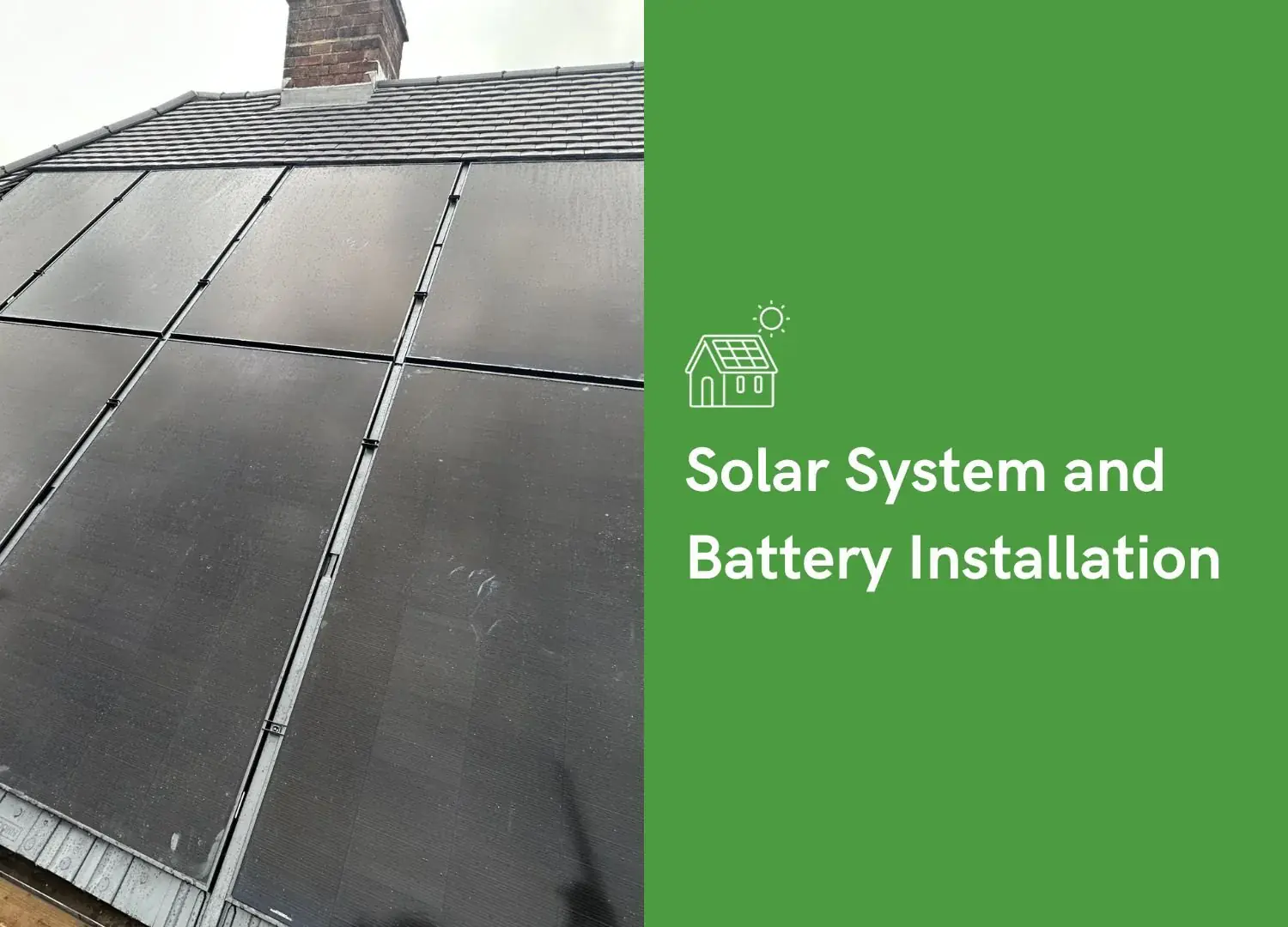
Solar panels handle one half of the job, generating electricity while the sun is out. A battery system handles the other half. It stores the excess energy your panels produce so you can use it in the evening, overnight, or during a power cut instead of buying it back from the grid at full price. For homeowners and small businesses across the South and South East of England, adding battery storage is usually the step that turns a solar panel system from "generates some electricity" into "meaningfully cuts my energy bills".
This guide explains what battery storage does for a solar system, how retrofitting works on an existing solar panel system, how to size a battery to your usage, and what actually happens during a professional battery installation. As an MCS-certified installer and advisor, CRG Direct designs and fits solar battery systems for both residential and commercial customers, so wherever useful we've flagged where a site survey earns its keep.
What does a battery system do for your solar panels?
Without storage, any electricity your panels generate that you don't use in real time gets exported to the grid. A battery captures that excess solar energy instead, holding it until you need it. Three benefits follow.
Lower energy bills. Storing your own free electricity and using it in the evening means buying far less from the grid at peak rates. This is where most of the savings on a solar battery system come from, and how much you save depends on your usage, generation and energy costs.
Backup power during outages. A correctly specified battery can keep essential circuits running during a power cut, giving you resilience that solar panels alone can't provide.
A greener footprint. Using more of the clean energy you generate, rather than drawing grid electricity that may be gas-fired, cuts your carbon footprint and moves you closer to genuine energy independence.
You can still earn from any surplus you don't store. The best fixed smart export tariffs currently pay around 15p per kWh, and rates change regularly so it's worth comparing. A battery simply lets you prioritise self-use first, which is usually worth more than the export rate.
Can you add battery storage to an existing solar system?
Yes. You can add battery storage to an existing solar panel system, and it's one of the most common upgrades we handle. How straightforward it is depends on your current setup, which is why we recommend an on-site technical survey before committing to a design.
A survey checks your existing solar compatibility: the type and age of your current inverter, the condition of your wiring and consumer unit, how much electricity your panels generate, and where a battery could safely go. In some cases your current inverter can stay. In others it may need replacing for battery compatibility.
There are two main retrofit routes:
- AC-coupled. The battery is added alongside your existing solar inverter with its own separate inverter/charger. Nothing about your current solar array changes, so disruption is minimal. This is the usual choice for retrofitting onto an existing solar system.
- DC-coupled. Your existing inverter is replaced with a hybrid inverter that manages both panels and battery through one unit. It's slightly more efficient and tidier, but it's a bigger job because the core of the system is being swapped out.
Most retrofits are completed with minimal disruption in a day or two. A survey is what tells you which route fits your home and whether an inverter upgrade is worthwhile.
Battery system types and home battery options
Not all storage batteries are equal. A few points to weigh up before you buy.
Chemistry. Modern home battery systems use lithium-ion, and increasingly LFP (lithium iron phosphate), a lithium-ion variant known for a longer, safer service life. Both are far more efficient than the old lead-acid batteries, charge faster, and need less maintenance. A lithium-ion battery typically lasts 10-15 years, versus 5-10 years for lead-acid, so lithium is now the default for solar storage.
Plug-and-play vs modular. Plug-and-play units offer a fixed capacity in a single package. Modular systems let you stack extra battery units later, so you can start smaller and expand as your energy needs grow.
Hybrid inverters. If there's any chance you'll add more storage, an EV charger, or a heat pump down the line, a hybrid inverter makes future expansion much simpler.
Brand and warranty. Home battery systems start from around £3,995, with premium units such as the Tesla Powerwall 3 from £7,795. Whatever the brand, check the warranty term, the guaranteed usable capacity, and the throughput or cycle guarantee, not just the headline price. For prices by battery type and size, see our guide to solar battery cost.
How big a battery do you need?
Most UK households land between 5 kWh and 10 kWh. Getting the size right is what decides how much of your bill a battery actually offsets. Too small and you still buy plenty from the grid. Too big and you've paid for capacity you'll never fill.
Start with your bills: work out your average daily electricity use in kWh from 12 months of statements or your smart meter. Then focus on your evening and overnight usage, the hours after your panels stop generating, because that's the demand a battery actually covers. Match the battery to peak usage times rather than total daily consumption.
Most home battery systems range from 5 kWh to 15 kWh. Remember that usable capacity is slightly less than the headline figure once round-trip efficiency losses are accounted for, so allow a little headroom. It's also sensible to adjust expectations for seasonal sunlight. A battery that fills easily in summer may only part-charge on a short December day.
If you'd rather not do the maths, CRG Direct's survey returns a tailored capacity recommendation based on your actual usage. Book a survey.
How does battery installation work, step by step?
A typical battery installation takes one to two days and follows the same milestones whether it's a retrofit or part of a new solar system.
1. Initial assessment. We carry out an energy survey and check your roof, panels, existing inverter, and wiring compatibility, then recommend the right battery capacity and location.
2. Professional installation and electrical integration. A qualified electrician familiar with UK standards mounts and secures the battery, wires it to the inverter or consumer unit to spec, and fits the required circuit protection and isolation devices. Getting the system correctly wired into your home's electrical system is what keeps it safe and compliant.
3. Commissioning, testing and handover. We commission the system, connect its monitoring platform, complete the DNO notification and MCS paperwork, and walk you through shutdown and emergency instructions before we leave.
Watch a battery installation in action
Where can a solar battery be installed?
A garage, utility room, or a suitable external enclosure are the usual homes for a storage battery. Where the battery goes matters as much as which battery you choose. Batteries should not be installed in lofts or bedrooms.
Installation follows PAS 63100:2024, the UK fire-safety standard for domestic battery storage, which sets requirements around ventilation to prevent overheating and safe siting away from living and escape spaces. A professional installer will design the location around these rules, which is another reason the on-site survey matters before anything is fixed to a wall.
Paperwork, grants and finance
Every compliant battery installation needs a DNO notification, telling your local network operator that storage has been added, and should be carried out by an MCS-certified installer so the work meets the recognised standard.
Local support is worth checking too. Council-run schemes (often listed under Home Energy Conservation Act, or HECA, reporting) change from year to year, so confirm eligibility for your postcode before you budget around them. Adding battery storage to an existing system typically costs around £5,000 to £7,000, and CRG Direct offers finance including 0% APR over three years, plus commercial options for businesses.
Monitoring, maintenance and what comes next
Once the system is live, an app gives you real-time battery status: charge level, solar generation, and how much grid electricity you're avoiding. We recommend periodic health checks and keeping firmware up to date so the system keeps performing as designed.
Solar batteries are low-maintenance and typically last 10-15 years. When one eventually reaches end of life, it should be recycled responsibly, and modular systems make replacement or expansion straightforward.
CRG Direct services
CRG Direct provides energy surveys and bespoke system designs for both residential and commercial customers across the South and South East. We fit standalone battery retrofits as well as combined solar, battery, and heat-pump packages, all installed to MCS and PAS 63100 standards.
To get started, book a free survey and we'll return a fixed quote with a battery recommendation tailored to your home or premises.
FAQs
Can I add battery storage to an existing solar panel system?
Yes. Most existing solar systems can be retrofitted with a battery, usually via an AC-coupled setup that leaves your current panels and inverter untouched. Occasionally the inverter needs replacing for compatibility, and a survey confirms which applies to you.
How long does battery installation take?
Typically one to two days, including commissioning, testing, and handover.
How long will a solar battery last?
Most lithium-ion home batteries last 10-15 years. Check the manufacturer's warranty for the guaranteed capacity and cycle life.
Where can the battery be installed?
A garage, utility room, or external enclosure, somewhere ventilated and compliant with PAS 63100:2024. Batteries must not be installed in lofts or bedrooms.