
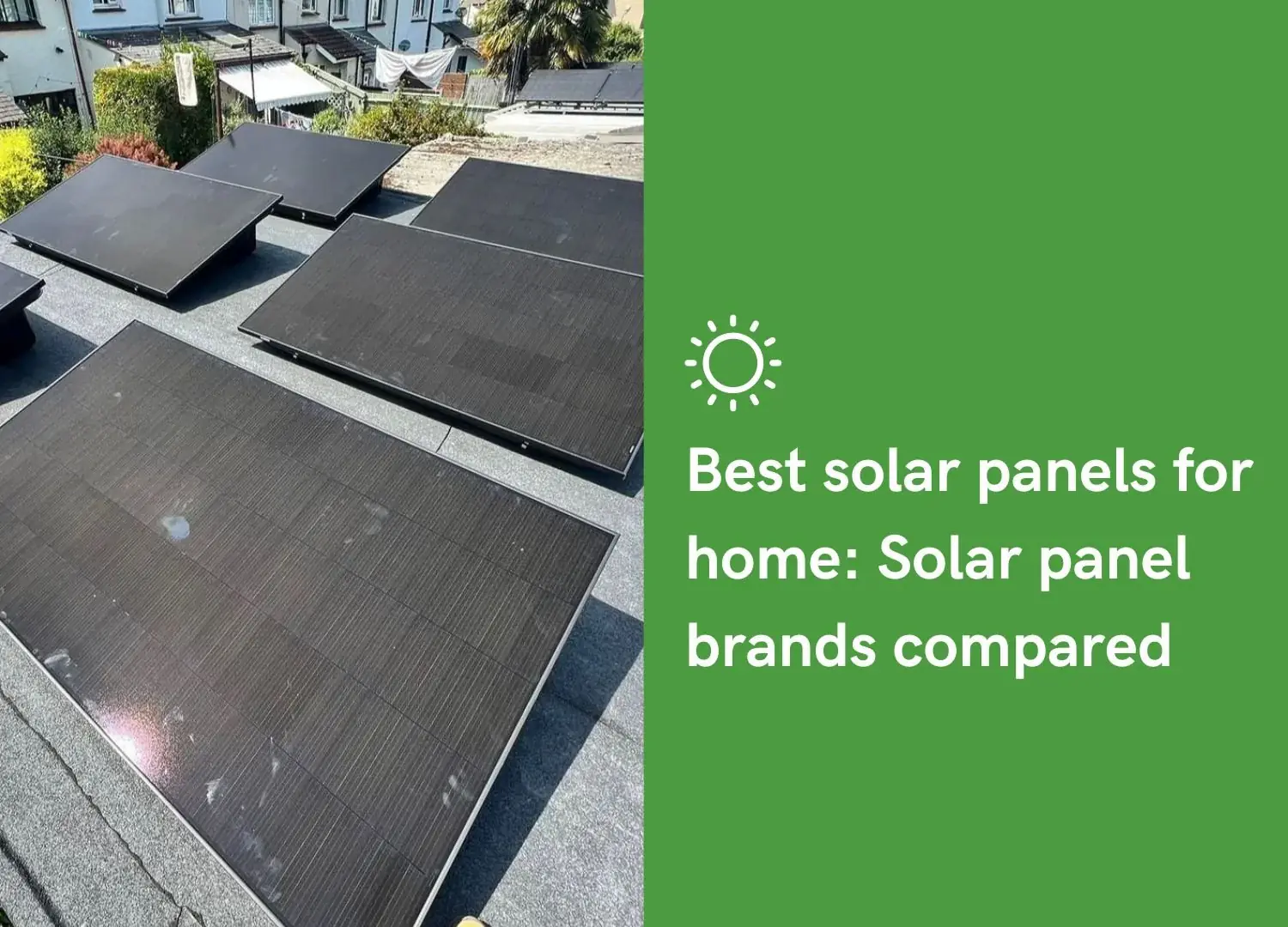
Popular brands compared, and what to look for
Perlight, JA Solar and Jinko are the most commonly installed residential solar panel brands in the UK. The right system for your home depends on your roof space, your daily energy needs, and how much usable electricity you want to generate.
This guide ranks the panels worth considering for a UK home in 2026, then walks through how to pick between them.
Top 10 solar panel brands for UK homes
| # | Brand & Model | Panel Type | Max Efficiency | Max Wattage | Product Warranty | Performance Warranty | Best For |
| 1 | Project Solar Evolution Max | Monocrystalline (TOPCon) | 25.5% | 500W | Lifetime | Lifetime | Highest efficiency on the UK market |
| 2 | LONGi Hi-MO S10 | Monocrystalline (HPBC) | 25.0% | ~490W | 25 years | 30 years (88% retention) | Premium efficiency, strong low-light performance |
| 3 | AIKO Neostar 3 | Monocrystalline (N-Type ABC) | 24-25% | ~440W | 25 years | 30 years | Best power output per square metre |
| 4 | JinkoSolar Tiger Neo 3.0 | Monocrystalline (N-Type TOPCon) | 24.8% | 495W | 25 years | 30 years (87.4% retention) | Large households with high energy needs |
| 5 | SunPower Maxeon 6 | Monocrystalline (Maxeon) | 22.8% | 440W | 40 years | 40 years | Lowest degradation, longest warranty |
| 6 | Perlight Delta 515W | Monocrystalline (N-Type, double glass) | 23.2% | 515W | 30 years | 30 years | Durability, moisture resistance, mid-range cost |
| 7 | REC Alpha Pure-R | Monocrystalline (N-Type) | 22%+ | ~430W | 25 years | 25 years | Low degradation, UK climate performance |
| 8 | JA Solar DeepBlue 3.0 | Monocrystalline (PERC/N-Type) | 21.3-22.5% | 555W | 25 years | 25 years | Best value, solid output at a lower price |
| 9 | Qcells Q.TRON BLK-G2+ | Monocrystalline (Q.ANTUM) | 21-22% | ~400W | 25 years | 25 years | Cloudy climates, cost effectiveness |
| 10 | Panasonic EverVolt | Monocrystalline (HIT) | 21-22% | ~410W | 25 years | 25 years | Brand reliability, consistent energy yield |
At a glance
| Brand | Low-Light Performance | Suits Limited Roof Space | Price Point |
| Project Solar Evo Max | ★★★★★ | ★★★★★ | Premium |
| LONGi Hi-MO S10 | ★★★★★ | ★★★★★ | Premium |
| AIKO Neostar 3 | ★★★★★ | ★★★★★ | Premium |
| JinkoSolar Tiger Neo 3.0 | ★★★★☆ | ★★★★☆ | Mid-Premium |
| SunPower Maxeon 6 | ★★★★★ | ★★★★☆ | High Premium |
| Perlight Delta 515W | ★★★★☆ | ★★★★★ | Mid |
| REC Alpha Pure-R | ★★★★☆ | ★★★★☆ | Mid-Premium |
| JA Solar DeepBlue 3.0 | ★★★★☆ | ★★★☆☆ | Budget-Mid |
| Qcells Q.TRON BLK-G2+ | ★★★★☆ | ★★★☆☆ | Mid |
| Panasonic EverVolt | ★★★★☆ | ★★★☆☆ | Mid |
What to look for when choosing solar panels
1. Efficiency
Efficiency tells you how much sunlight a panel converts into usable electricity. A panel rated at 19% converts 19% of the sunlight it receives into power for your home.
UK residential panels range from 19% to 25% efficiency. No panel hits 100% (the technology isn't there yet), but 19-25% will run your home and produce surplus electricity. The more efficient the panel, the more electricity you generate per square metre, which matters most when roof space is tight.
2. Wattage and power output
Wattage is the maximum power output a panel produces under standard test conditions, so a 450W panel produces more than a 400W panel of the same size. If your roof has limited space, fewer high-wattage panels will serve you better than more panels at lower output. If your roof is large, wattage matters less.
3. Panel size
Most domestic solar panels measure around 1.65m x 1m, though this varies by brand. Check the dimensions of any panel you're considering against your available roof space before committing. For more on this, see our guide to solar panel sizes.
4. Monocrystalline vs polycrystalline
Monocrystalline panels are made from a single silicon crystal. They carry higher efficiency ratings, perform better in low light, and suit the UK's cloudy climate. They're the standard choice for UK homes in 2026.
Polycrystalline panels are made from multiple silicon crystals. They cost less but generate less power per square metre. They've largely been replaced by monocrystalline panels in the UK residential market.
5. Safety features
Solar panels carry live electrical current. Buy from a reputable brand through a trusted installer, and check the panels are MCS-approved. You need MCS certification to access the Smart Export Guarantee (SEG) and get paid for surplus electricity you export.
Key safety features to look for:
- Fire resistance. Panels tested to withstand high temperatures and resist sparking or spreading flames.
- Overvoltage protection. Built-in devices cap voltage during power surges and lightning strikes.
- Electrical isolation. Panels can be switched off during maintenance to prevent electric shock.
- Ground fault protection. Usually built into the inverter, this detects current leakage and cuts shock risk.
- Weather resistance. Tempered glass and aluminium frames handle high winds, hail and temperature extremes.
- 8-panel system and inverter, from £6,300
- 10-panel system, inverter and 5.12kWh battery, from £9,561
- 5.12kWh battery and 3.6kW inverter, from £4,550
6. Warranties
Most panels carry a 25-year product warranty. Perlight extends this to 30 years, and SunPower Maxeon to 40. The performance warranty (also called a linear output warranty) is separate. It guarantees a minimum energy output that declines gradually each year, for example 98% in year one, dropping slowly thereafter.
Your inverter also needs attention. Most inverters need replacing after around 10-15 years, so factor that into your long-term costs.
Installation options
Roof-mounted is the most common setup. Panels sit directly on the roof, using your existing sun exposure without taking up ground space.
Ground-mounted systems suit properties with land. You can angle them precisely for maximum output, which often improves generation compared to a fixed roof pitch.
Flat roof and wall-mounted systems use adjustable brackets for more positioning flexibility, useful if your roof doesn't face south or has shading issues.
Get a professional installer to assess your roof's size, orientation and condition before you decide. The difference in yield between a well-positioned and poorly-positioned system is significant.
Maintenance
A solar panel system needs little hands-on attention, but a few checks keep it running well. Clean the panels a few times a year, as dust, bird droppings and debris cut into production more than most people expect. Inspect for cracked glass or loose connections after storms. Monitor your output, as a sudden drop usually signals a fault worth investigating.
Professional maintenance services are available if you'd rather not do it yourself.
Costs and financial benefits
A typical domestic solar panel system costs between £5,000 and £10,000 installed. For a full breakdown by system size, see our solar panel cost guide.
Several schemes improve the numbers:
Smart Export Guarantee (SEG). You're paid for surplus electricity you export to the grid. Rates vary widely by supplier and change over time, from around 1p/kWh at the bottom to 15-18p on competitive fixed tariffs, and higher still on time-of-use tariffs like Octopus Flux if you have a battery. We keep a current ranking in our guide to the best SEG tariffs.
Energy Company Obligation (ECO4). Low-income and eligible households can access funding toward installation costs.
0% VAT. Residential solar installations are zero-rated for VAT until March 2027.
How much you actually save depends on your usage, your generation and your energy costs. The Energy Saving Trust estimates a typical system saves a household a few hundred pounds a year on electricity bills, on top of any SEG income, but your figure will differ. Ask your installer to model it for your home.
Battery storage
Adding a battery lets you store solar energy generated during the day and use it at night or during a power cut. This cuts your reliance on the grid and helps you avoid peak-rate charges.
A battery typically adds £2,500-£6,500 to your installation, depending on capacity and brand. Whether the saving justifies that depends on your household's usage and how much surplus your system generates. Ask your installer to model it for your specific setup before deciding.
CRG Direct solar packages
Full systems installed from £6,300, including MCS certificate, mounting kit and HIES guarantee:
We work with GivEnergy, Sunsynk, Growatt and other leading brands depending on stock. Get in touch for current availability and a free quote.
"Prices are fully installed including mounting kit and HIES guarantee as well as registered with MCS. A proper job, as they say!"
How do solar panels actually work?
If you want the technical side, how PV cells turn daylight into electricity, what the inverter does, and what happens to the power you don't use, read our explainer on how solar panels work in the UK.